

IFS and Us
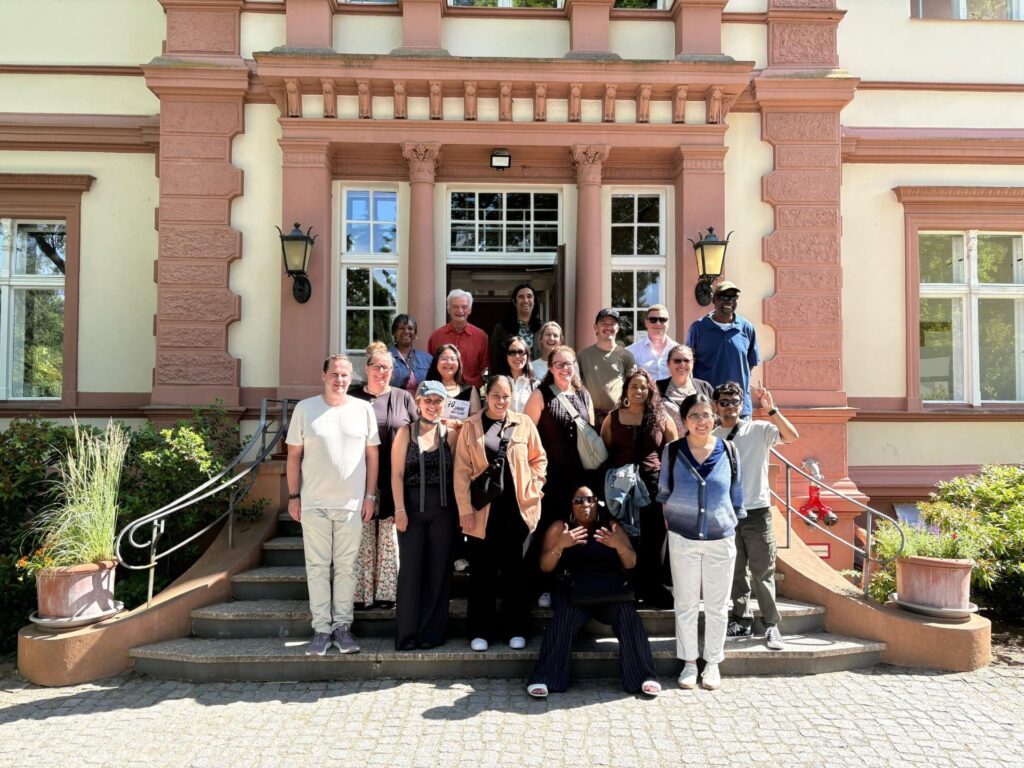
In June 2026, two ANHBC neighbourhood houses had the honour to travel Berlin, Germany to participate in the International Federation of Settlement Houses and Neighbourhood Centers (IFS) Conference. The weeklong journey was an important one, as Ben Quinn (Sasamat) and Gabby Guevarra (South Van) contributed and shared with the global audience around the theme of the week – Youth Advocacy, within the Neighbourhood House Movement.
Just over one month before Ben and Gabby travelled to Berlin, Anouk Cohen made her journey from Paris, France to begin her six-month work exchange from the French Federation of Settlements (FCSF) at ANHBC, all because of her connection to IFS.
The IFS Global Network connects settlement houses and neighbourhood houses, together with the federations, associations and peak bodies that represent them. ANHBC is a member of IFS, and across countries and communities, IFS and its members share knowledge, strengthen locally led action and work together on global challenges.
We hope you enjoy this Q&A with Gabby, Ben and Anouk, who share their own stories of the global Neighbourhood House Movement.
Where do you work and what is your role?

Ben: I am the interim Executive Director at Sasamat Outdoor Centre (SOC). My permanent role at Sasamat is Director of Operations.

Gabby: I am the Young Adult Settlement Counsellor at South Vancouver Neighbourhood House (SVNH).

Anouk: In Paris I am the Communications Officer at the French Federation of Settlements (FCSF). Here in Vancouver, I’m working with ANHBC’s Central Services team as a Communications Project Coordinator, and with the Neighbourhood Small Grants (NSG) team on the dissemination of a study looking at the impact of the NSG on Project Leaders.
How long have you been working for ANHBC and what brought you to the Neighbourhood House Movement?
Ben: I have been working at SOC since 2008. Camp programs inspired me at a young age to give back to my community through the same transformative experiences I received as a youth. Now as I have continued my career here, I find inspiration from the elements of our work that advances the Neighborhood House Movement, land justice, education, and the development of young community leaders.
Gabby: I have been working at SVNH for 6 years. I have always been interested in youth development, and I started as an adult volunteer for Homework Club which was a youth program, tutoring newcomer youth. I learned just as much from the youth as they learned from me. Newcomer youth continue to face challenges as they adapt to a new academic and social environment here in Canada. However, they demonstrated resilience by persevering and reaching out for support. The youth and newcomer young adults that I work with are the purpose and meaning behind the work.

Anouk: I have worked in my role at FCSF for nine years, and I started working for ANHBC on April 27, and my contract ends on October 27. I believe that what neighbourhood houses do—wherever they are—is really meaningful.
After working in France, I was eager to see how community work is organized in another country, and specifically in Canada. Through IFS, I’ve had the opportunity to meet people from different European organizations, and now I have the chance to connect with people working in Canada.
Tell us about the IFS 2026 Berlin Conference
Ben: The IFS conference (June 15-19) was themed around advocacy in youth work across the world. The conference brought together professionals in neighborhood house aligned work from Canada, United States, Australia, Germany, and France. Through presentations, events, excursions, and workshops we cross-pollinated and explored themes of youth justice, immigration, land justice, oppression, education, housing, social work, and much more. If one thing was very clear by the end, it was that the neighborhood house movement really is worldwide, and there are champions of our important work everywhere.

What was the greatest highlight of attending the Conference?
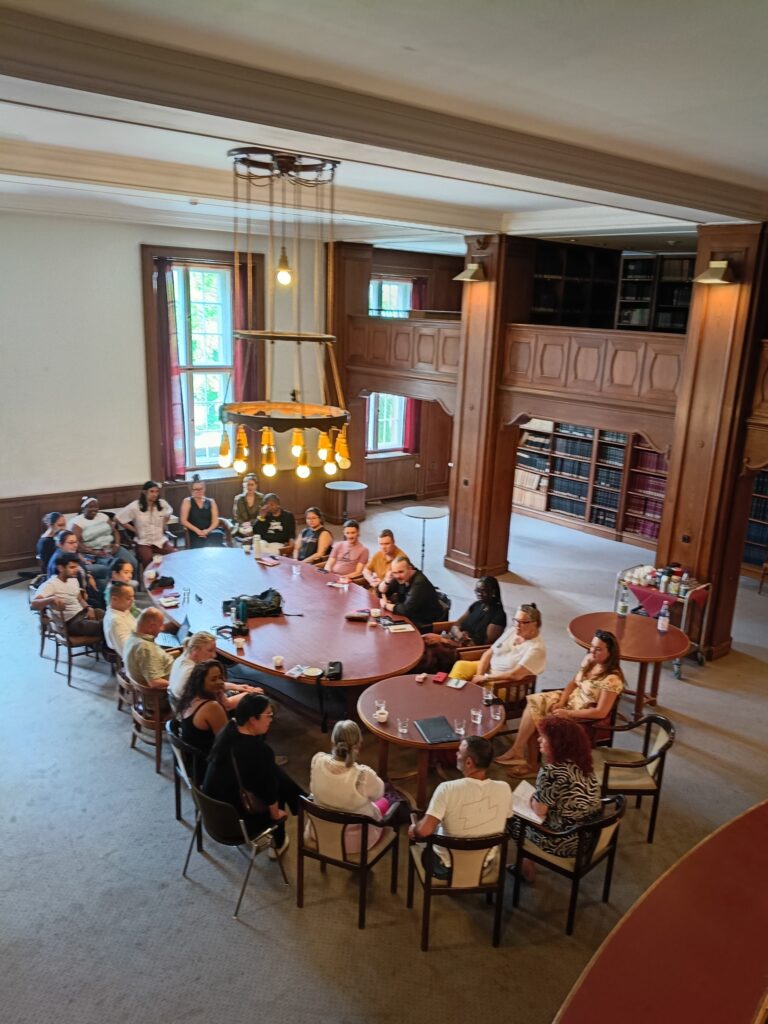
Gabby: A specific moment would have to be a guest speaker during the Gala at Ufa Fabrik, who celebrated their 75th anniversary as an organization. The guest speaker, Professor Dr Ulrike Briza, stated “Dignity is a non-negotiable.” It is something simple yet so profound. It sums up our work, to continue the movement to improve our systems here in Canada. Both internally and through our advocacy when working with government, we must continue to be present in our community, ask questions, be curious, and remember that we hold the stories of so many families, youth and individuals who step through our doors.
What brought you to Vancouver? What will you take back to your work in Paris?
Anouk: I’m deeply interested in IFS’s work, and I’ve supported several of their projects and taken part in study visits to Berlin and Tampere, Finland. I was specifically looking for an experience in Canada, as I’d wanted to visit and discover the country for a long time. Vancouver felt like a perfect fit because it’s a vibrant, cosmopolitan city surrounded by nature—which is exactly what I was looking for.
When I go back, I’ll share my experience with my coworkers and introduce them to ANHBC and the work that neighbourhood houses are doing here. I’ll also emphasize the value of having an international network of neighbourhood houses and learning from each other across countries.
On a more practical level, I’ve learned a lot about website accessibility and seen some good practices that I’d like to bring back and implement in my work. I’ll probably also bring back some ideas for fun team challenges—like the squat challenges (a current teambuilder on the Central Team)! 😊

What inspires you to work in the Neighbourhood House Movement?
Anouk: Neighbourhood houses foster a sense of belonging and social inclusion. They help people connect with one another and access essential programs and services.
I think this is especially important at a time when democratic life is under pressure and people can feel increasingly disconnected from one another.
Gabby: The Berlin conference showed how intertwined our neighbourhood house stories are across the world. One thing that continues to stand out is the motivation of youth across the globe and how much passion all youth workers have when highlighting the meaningful impact programming has on the young people that they work with.
Ben: For me at Sasamat, recognizing the important role we play in youth climate education, reconciliation, and land justice is what keeps me going.
What is your favourite thing to eat or drink right now?
Ben: After coming back from Berlin, I am absolutely addicted to Doner Kebabs 😀.
Gabby: I can never say no to a cup of coffee, preferably iced. This is something that I always need to have in my hand in the morning and sometimes in the afternoon before youth programs!
Anouk: Margaritas! 😊
Thank you, Gabby, Anouk and Ben for sharing your IFS journeys across the globe, and for your contributions to the Neighbourhood House Movement here at ANHBC, and far beyond!
Interview conducted by: Jenna Otto-Wray